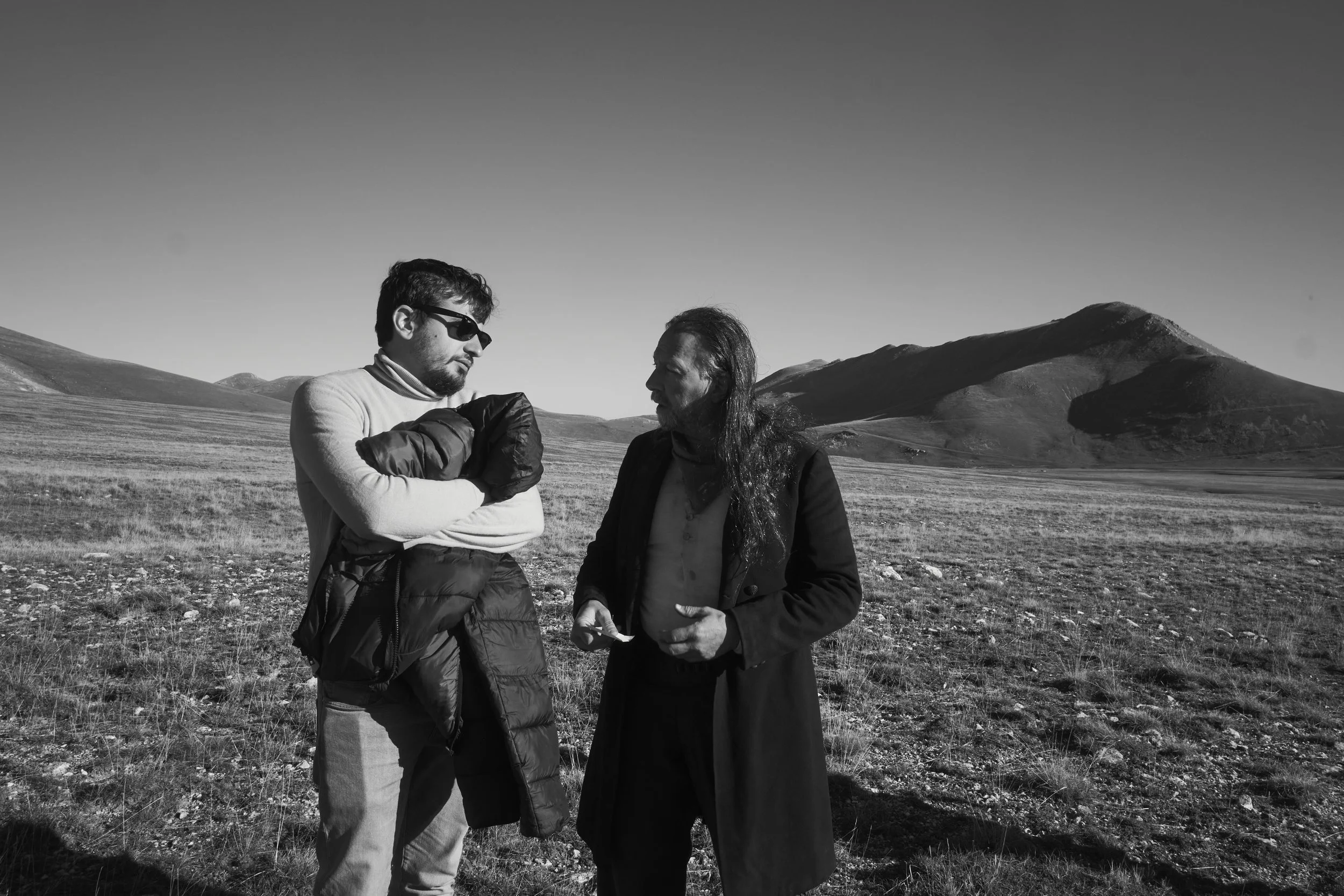
Valerio Carta is an Italian-Canadian filmmaker based in Toronto.
I was born and raised in Italy as a Canadian citizen, and from very early on I felt shaped by two different cultural sensibilities, two ways of looking at people, stories, and the world. That duality has stayed with me, and it still informs the way I think about cinema today.
As a child, I was constantly inventing little worlds. What I loved most was gathering people, staging small performances, building scenes out of nothing, and feeling the excitement of seeing imagination take form in front of others. For me, it was never just a game. There was something deeply alive in that transformation, in watching something invisible suddenly become real, physical, and shared.
Over time, cinema became the natural place where all of that converged. Not just because it tells stories, but because it does so through a language of its own — through movement, bodies in space, rhythm, action, and the emotional force of images. That has always fascinated me: the idea that film can express something truthful and deeply human without needing to explain everything in words.
I’m drawn to stories where something fundamental gives way — a family structure, a moral order, a social code, an idea of who someone believes they are. Again and again, I return to moments of rupture: when the world a character has been living inside suddenly stops making sense, and they are forced into a more direct confrontation with themselves.
I often use genre — sometimes openly, sometimes more invisibly — as a frame for something more interior. What matters most to me is the possibility of reaching the soul of a person through cinema, and of creating something that an audience can recognize immediately and sensorially, even before they have the language to define it.
Approach
I start from a situation — something already under pressure. A place, a body, a relationship that feels like it could break at any moment.
From there, the work becomes about following that pressure honestly. What happens after a line is crossed. When something irreversible takes place, and everything that follows begins to shift.
I think about cinema in physical terms. Movement. Distance. Weight. A body moving through space. The way tension builds through rhythm and duration, not just through dialogue. I’m interested in images that feel true before they are fully understood.
I often work through genre, but not to reproduce it. I use it as a frame — something that creates expectation, and then allows me to go somewhere more A, more human, and less predictable.
My influences come from different places, but they share a seriousness about cinema. Tarkovsky and Herzog shaped the way I think about image and time. Michael Mann and Sam Peckinpah continue to influence how I think about tension, rupture, and consequence. Writers like McCarthy and Faulkner, and painters like Goya and Remington, have deeply shaped how I respond to landscape, violence, and identity.
I’m currently developing Wyler, my first Canadian film — and the project that feels closest so far to the kind of cinema I’ve been moving toward.
FILMOGRAPHY
Selected Works
WYLER
My first Canadian film.
In Development
Western short shaped by landscape, ritual and loss.
Festival Run
Short drama centered on absence, fracture and emotional inheritance.
Premiered at Rome Film Fest